Dyad
A third space for initiating and finding face-to-face conversations. Members write a conversation, offer times and places, and meet strangers in person. The platform is the coordination layer and nothing more. No messaging, no recommender, no feed. Open source, run with collective governance, moving to steward-ownership. The first iteration reached 200 active members with a waitlist of 1,000.
It started rooted in what we, the founders, thought the product should be. We built discover as a three-dimensional space you move through, a beautiful and contemplative place. It ended as a design made with its stakeholders. The members who write and the members who read, the testers who walked the journey, the engineer who owns the underlying system, the venues where people meet, the stewards and peer moderators who hold the rules, and the contributors to the open-source repository.
How we got to the map
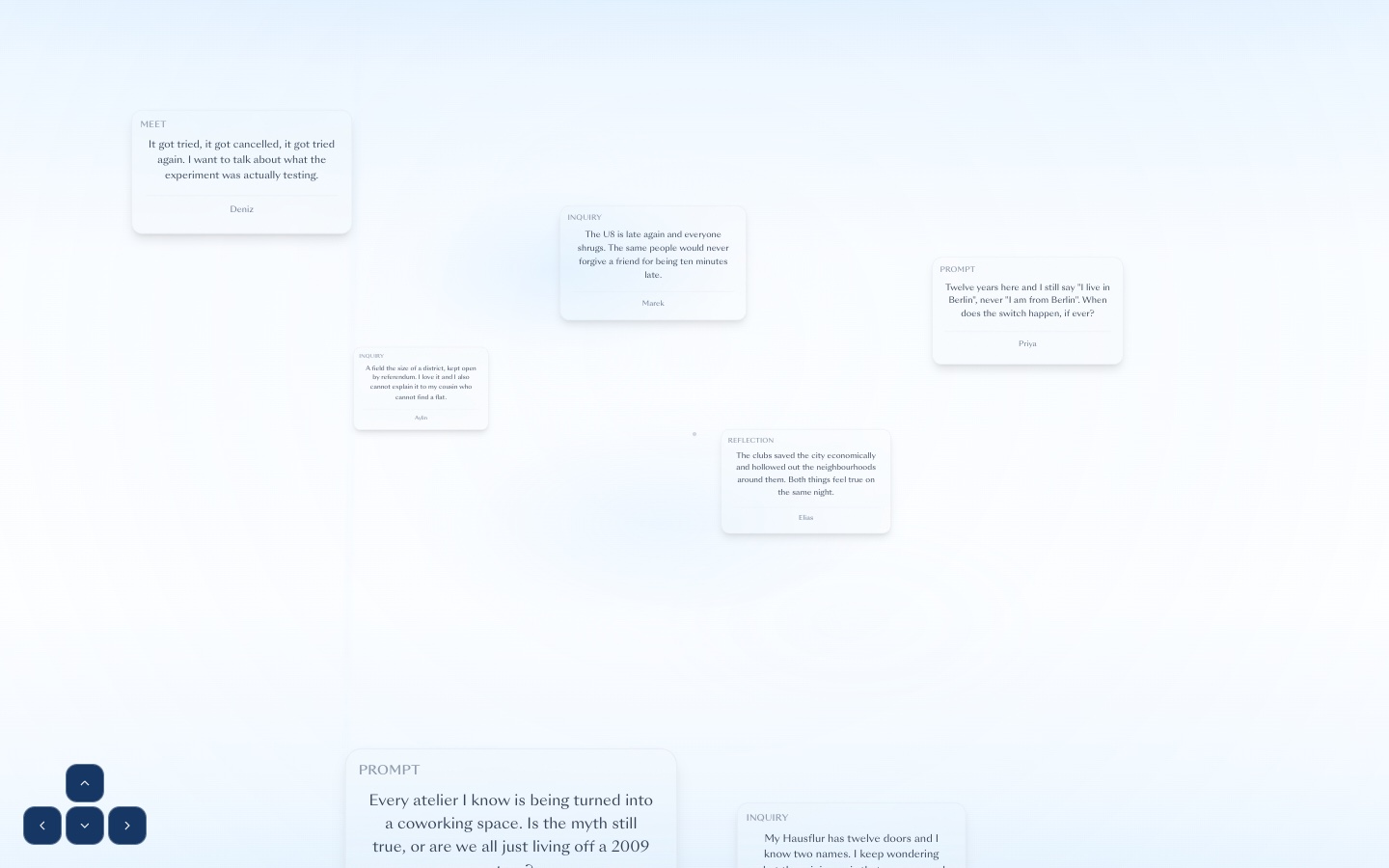
The 3D place, July 2025. Six degrees of movement, a drag to look around. Beautiful, and about us. On phones it would not hold, and by August a flat list was the primary view.
Two maps, autumn 2025. A graph of conversations and people showed connections but never where or when. A street map with pins jittered off the address showed that place is what matters to someone deciding whether to go.
Members, early 2026. Tests in Copenhagen and Berlin, then interviews. What they prioritised was practical. Who is here, when and where before I commit, invitations where I will see them. Nobody asked for a place to float in.
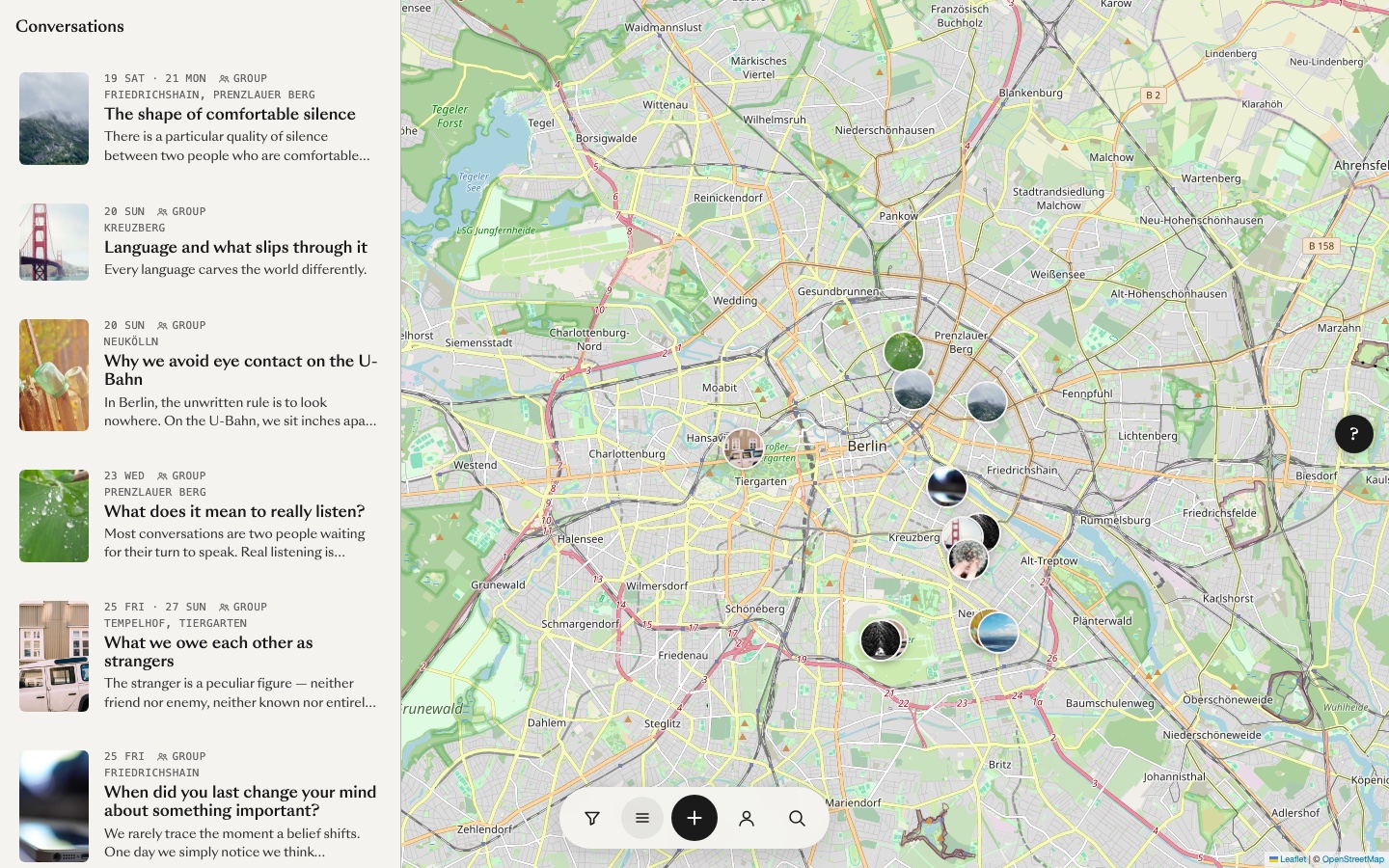
The map, March 2026. Full screen, a sheet on tap. The canvas code was deleted three days later. Playtesting set the last priorities, date and place visible and the map filling the page. Each stakeholder finds what they need in the same view.
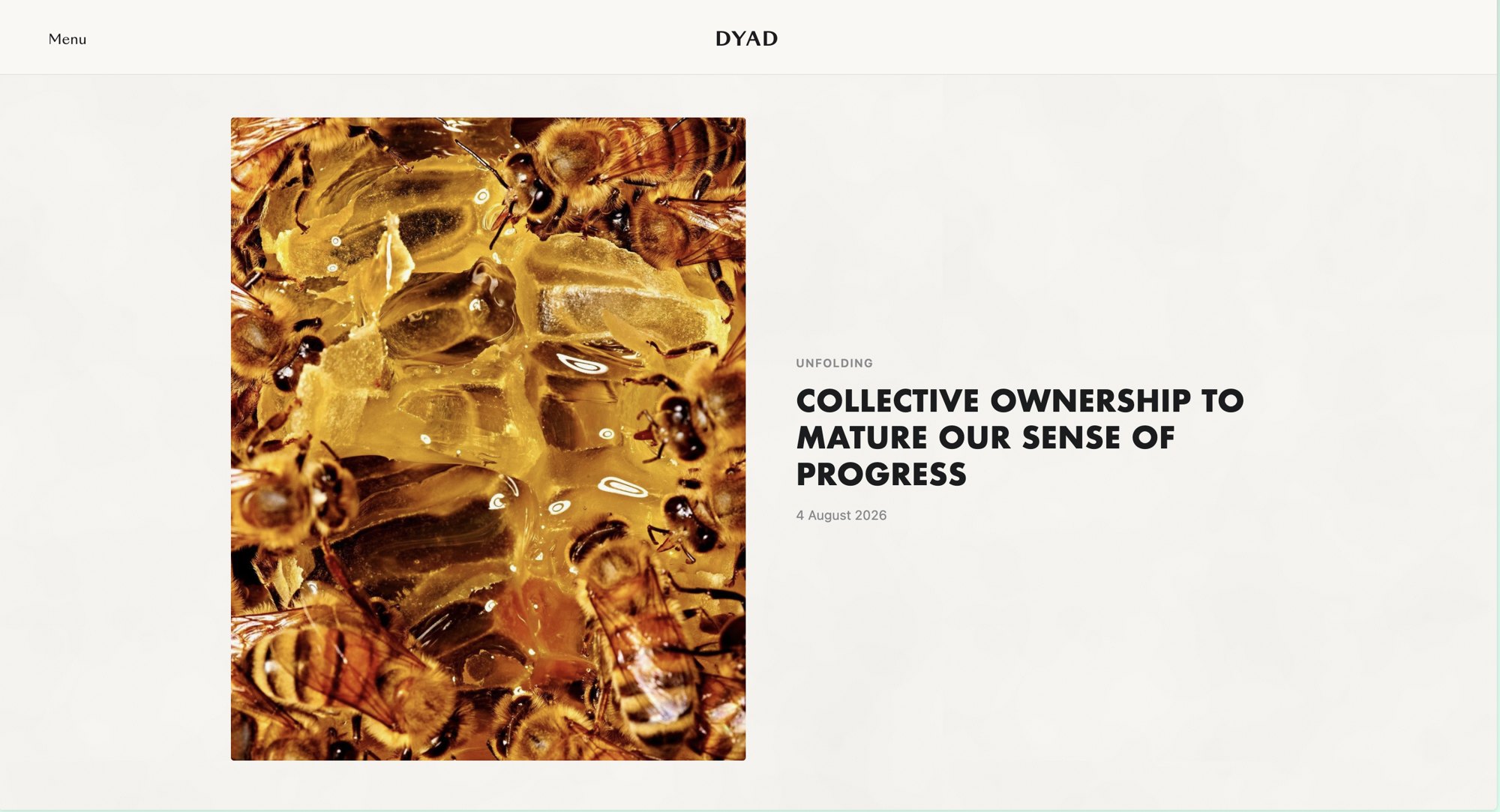
Unfolding
The weekly newsletter. Essays on collective ownership and social technology, a second register inside the site's design system.
Wiggling
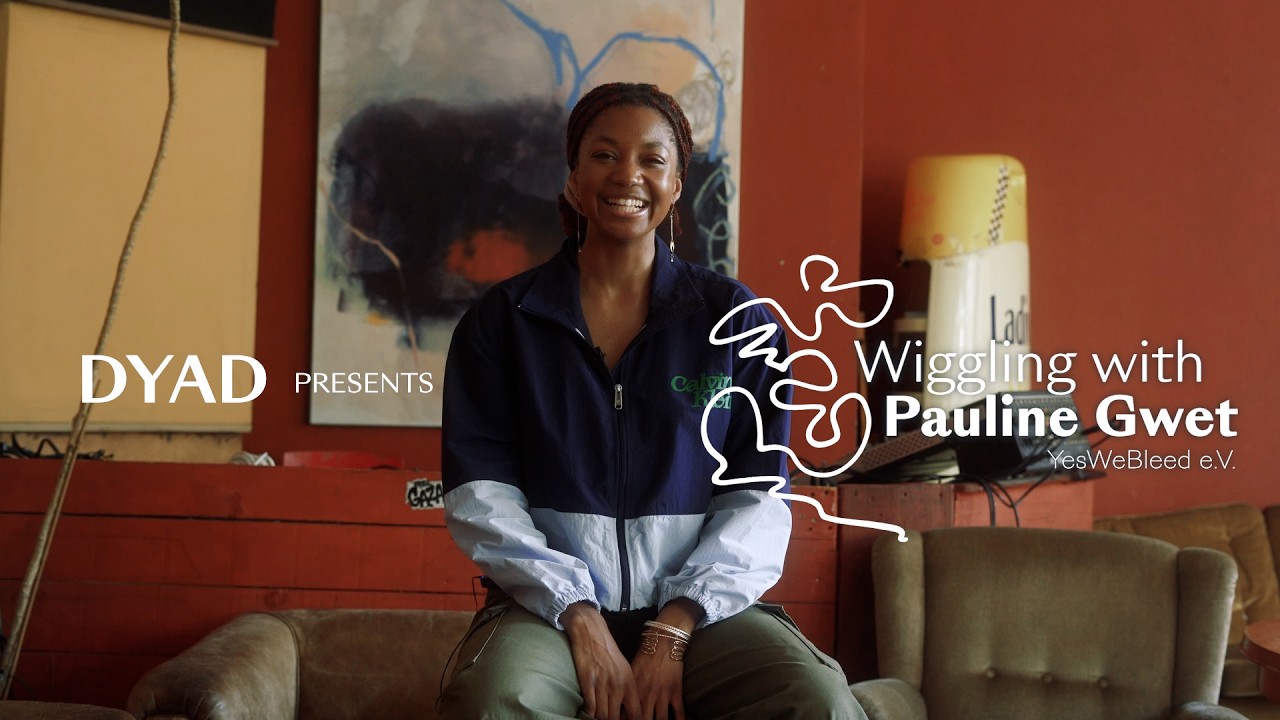
Wiggling is a conversation series about epistemic diversity: the many ways we come to know, interpret and move through the world.
Season one begins with intimate encounters with members of our community. We talk about what moves them emotionally, spiritually and intellectually, what their practices have taught them, and what becomes possible when different ways of knowing meet in conversation.
The zine
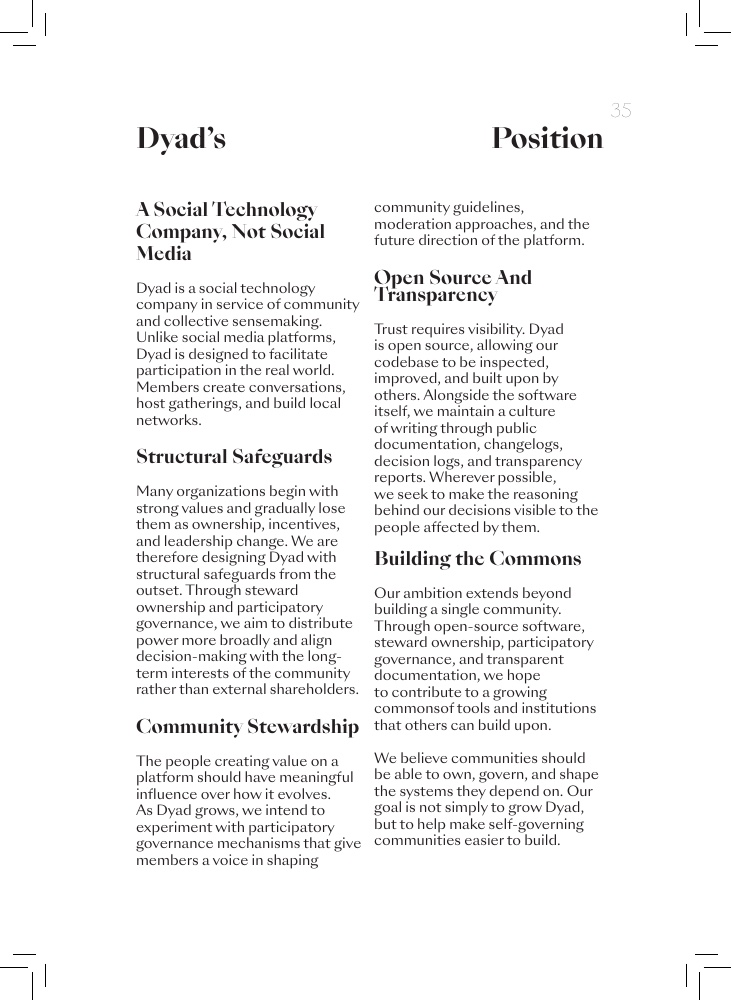
We printed a first issue of the Dyad zine, a draft edition that gathers the writing from our newsletter, Unfolding, with additional op-eds written for the community. 103 pages, set in InDesign in the same face as the site. The full edition is in progress.